
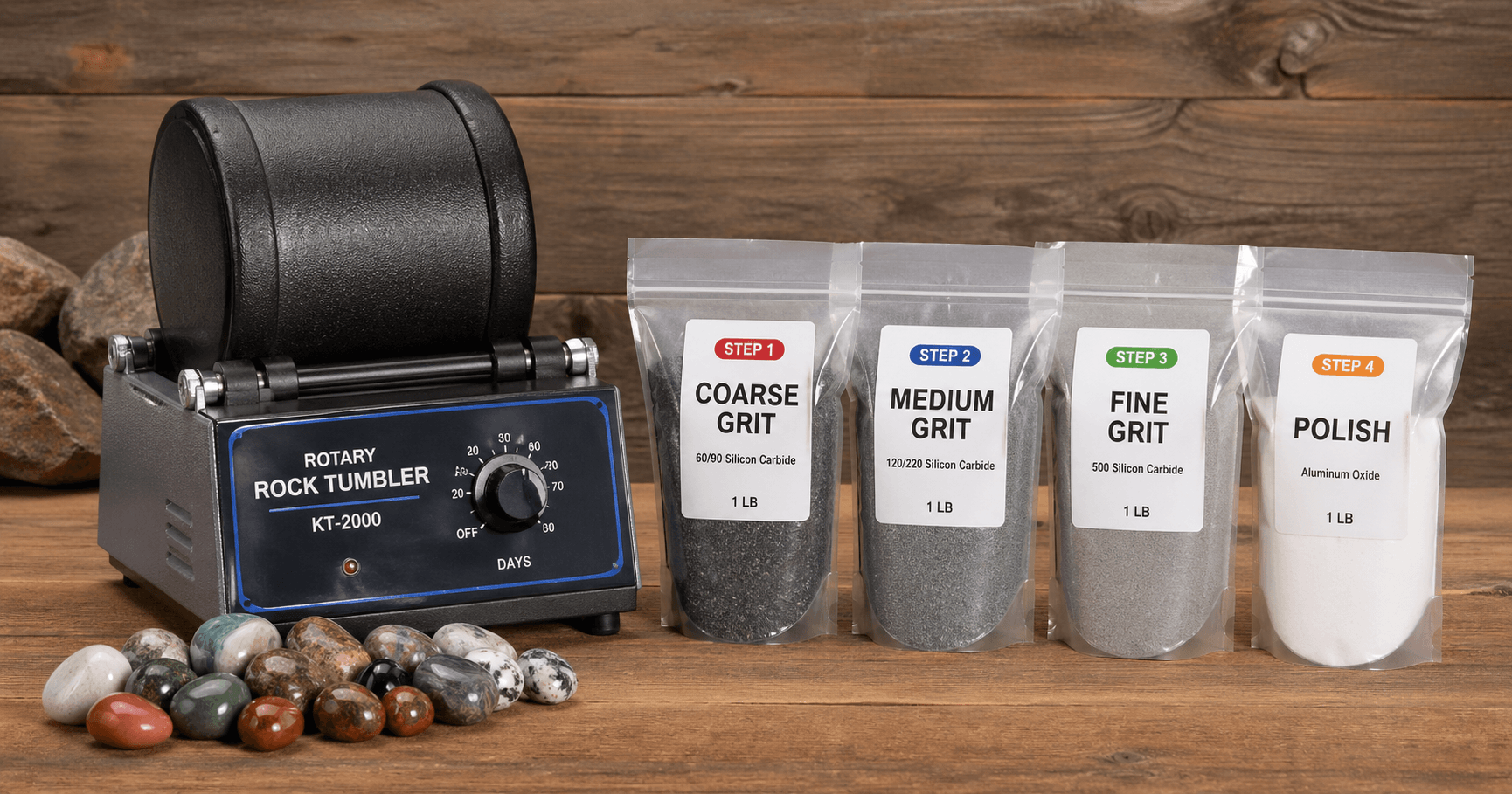
When rocks do not come out polished after you "did everything right," the problem is usually not the final polish itself. It is almost always something that happened earlier: the rocks were not fully shaped, bruising occurred, grit carried over, the barrel chemistry was off, or the stones were too soft or mixed.
Here is a practical troubleshooting guide.
1. Make sure the rocks are actually polishable
Not every rock will take a glassy shine. The best tumbling rocks are hard, dense, non-porous stones around Mohs 6.5–7, such as agate, jasper, chalcedony, quartz, petrified wood, and many cherts.
Rocks that often come out dull or waxy include:
A quick test: if the rock scratches easily with a steel nail, it may be too soft to polish well.
2. Do not mix hard and soft stones
A common issue is putting agates, quartz, jasper, obsidian, softer stones, and random river rocks together. Harder stones can grind softer ones into slurry, while softer stones can contaminate the polish stage.
Try running batches with similar hardness:
3. Spend more time in coarse grit
The coarse stage is where the polish is "earned." If stones still have pits, cracks, flat spots, bruises, or rough skin after stage 1, polish will not fix that.
Most rotary tumbler batches need 1–4 weeks in coarse grit, sometimes longer for agate or rough material. Replace the coarse grit weekly until the rocks are smoothly rounded and all defects you care about are gone.
Before moving on, each rock should feel smooth and look evenly shaped while wet.
4. Watch for bruising
Bruising creates tiny white or cloudy impact marks, especially on quartz, agate, obsidian, and glassy stones. Bruised rocks will look hazy no matter how good the polish is.
Causes:
Fixes:
5. Clean aggressively between stages
Grit contamination is one of the biggest causes of a dull finish. One grain of coarse grit carried into pre-polish or polish can ruin the shine.
Between stages:
Never dump slurry down a sink. It can harden in plumbing.
6. Check the slurry consistency
The slurry should usually be like thin cream or paint, not watery and not cement-like.
Too watery:
Too thick:
For many rotary tumblers, water should come just below the top layer of rocks, not fully submerge everything.
7. Use the right polish
Not all "polish" sold with cheap tumblers is true polish. Some kits include a pre-polish labeled as polish, which can leave stones smooth but not shiny.
Good final polish options include:
Avoid using household cleaners, sand, beach sand, or random abrasive powders as final polish.
8. Do not skip pre-polish
A good sequence is usually:
If the stones are not silky smooth before final polish, they are not ready.
9. Burnish after polishing
Sometimes rocks are polished but have a film stuck on them. Burnishing can remove residue and brighten the finish.
After the polish stage, run the stones with:
Run for a few hours to overnight. Do not use detergent with oils, scents, bleach, or additives.
10. Inspect the stones wet and dry
If the rocks look shiny when wet but dull when dry, they are not truly polished yet. That usually points to:
If they look dull even when wet, they may still be rough or scratched from an earlier stage.
Most likely causes, ranked
For beginners, the top causes are usually:
A good rescue approach is to take the dull stones back to fine grit or pre-polish if they are smooth but hazy. If they still have pits, scratches, flat spots, or rough patches, take them all the way back to coarse grit.
The good news: almost every dull batch can be saved. Tumbling rewards patience more than anything else, and the rocks you rescue often become the ones you're proudest of.